8 National Parks as Wellness Destinations

Croatia protects eight national parks, and every one of them doubles as a natural wellness destination: turquoise lakes for walking meditation, saltwater lakes warm enough to float in, old-growth forests where the loudest sound is a woodpecker. This guide covers all eight — what each park does for body and mind, what a 2026 ticket costs, and how to visit when the crowds are elsewhere.
Why a national park is a wellness destination
The Japanese call it shinrin-yoku — forest bathing — and it is the simplest wellness practice there is: unhurried time among trees, no phone, no goal. Research has linked time spent in forests with lower stress levels and improved mood, and Croatia’s parks offer the practice in its purest form, from the UNESCO-listed beech forests of Northern Velebit to the Dinaric old growth of Risnjak.
Parks also solve a problem studios can’t: silence. On the Kornati islands or the Premužić trail there is no traffic, no notifications and often no mobile signal — a digital detox enforced by geography. Treat a park day the way you would treat a spa day: one location, no itinerary-stuffing, and time budgeted for doing very little.
How to plan a restorative park day
Timing beats everything. The two most famous parks, Plitvice and Krka, sell discounted afternoon tickets in summer 2026 (Plitvice €25 after 16:00 instead of €40; Krka €30 after 15:00) — and late afternoon is exactly when the day-trip buses leave and the light turns golden. Early morning works just as well: gates at most parks open between 06:00 and 08:00.
The practical kit is short: water, walking shoes, swimwear where swimming is allowed (Krka’s marked zones, the sea parks, Mljet’s lakes — but not Plitvice), and cash or card for entrance fees that range from €7 to €45. Every park below links to its full listing with phone number, website and current details.
1. Plitvice Lakes — walking meditation on water
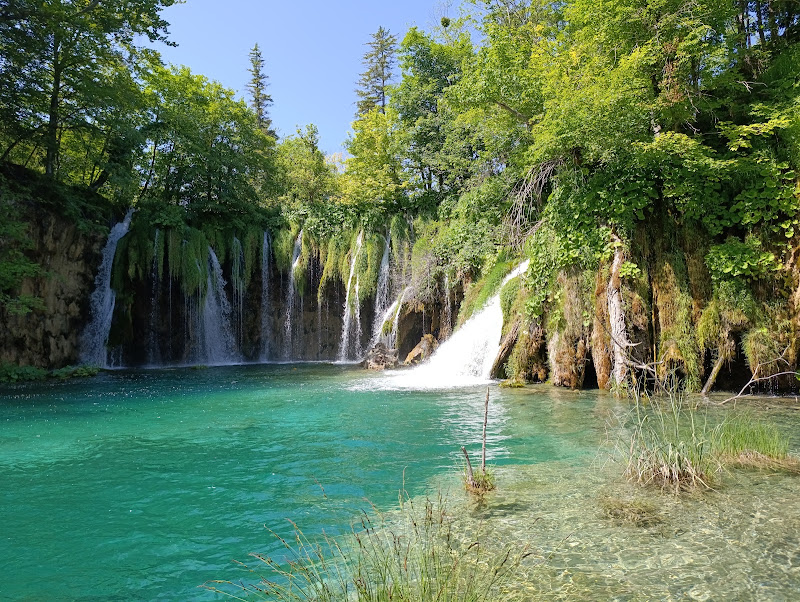
Sixteen terraced lakes spill into one another through travertine waterfalls, and the wooden boardwalks that thread between them set a pace you can’t rush — single file, water on both sides, spray in the air. It is the closest thing Croatia has to a built-in walking meditation, under UNESCO protection since 1979.
Plitvice rewards contrarian timing more than any other park: arrive at 07:00 or after 16:00 and the boardwalks empty out. Trails are graded into circular routes from two to eight hours, so you can size the day to your legs. Summer 2026 entry: from €25 (after 16:00; full-day €40), open 07:00–20:00.
Nacionalni park Plitvička jezera
Plitvička Jezera
2. Krka — waterfalls you can swim near
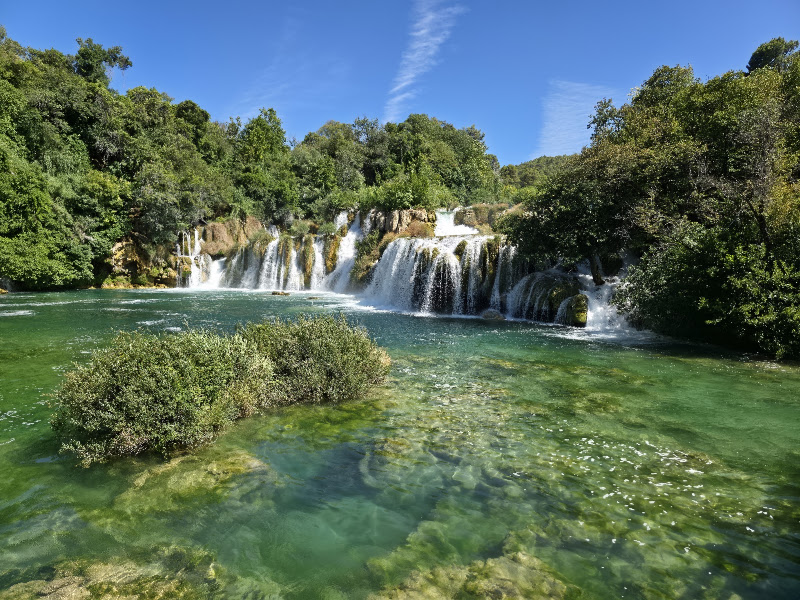
Krka is the sensory counterpart to Plitvice: instead of watching water from a boardwalk, you walk beside travertine cascades and, in marked zones downstream of the main falls, swim in the river itself. The walkways loop through reeds and mill ruins, and a boat runs to Visovac, a tiny island monastery that has sat in the middle of the river since the 15th century.
It is also the most accessible park on this list for a spontaneous day trip — the Lozovac entrance is 15 minutes from Šibenik and under an hour from Split. Summer 2026 entry: from €30 (after 15:00; full-day €40), open 08:00–20:00.
Nacionalni park Krka
Lozovac
3. Kornati — the archipelago detox
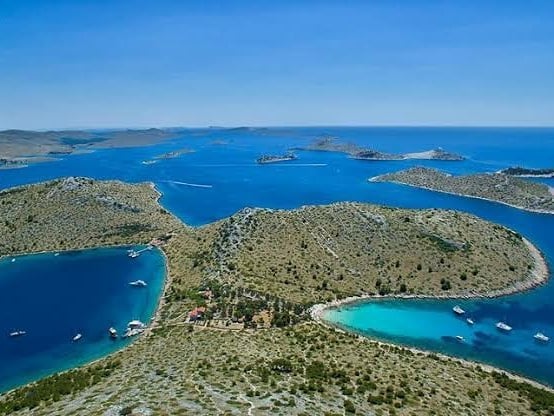
Eighty-nine islands, almost no permanent inhabitants, no roads and, across most of the park, no signal. Kornati is reached by boat — most visitors join a day excursion from Murter — and once you’re among the islands the programme writes itself: swim in coves that hold three boats at most, snorkel over seagrass meadows, eat at a konoba that gets its fish from the water in front of it.
Note the pricing quirk: the entrance fee is charged per vessel (€45 for a boat up to 7 m in season), so excursion guests pay it inside the trip price rather than at a gate. As digital detox destinations go, this is the strictest and the most pleasant in the country.
Nacionalni park Kornati
Murter
4. Brijuni — island calm off Pula
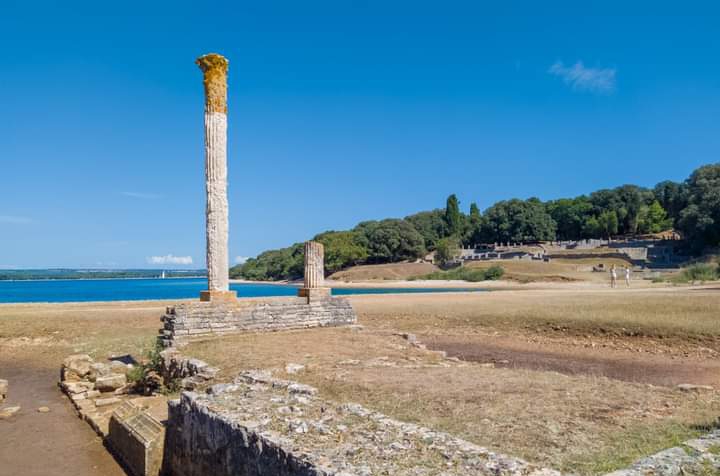
Brijuni is the gentlest park on the list: a 15-minute official boat from Fažana, then a car-free island of parkland, Roman villa ruins and a safari park descended from Tito’s menagerie of diplomatic gifts. Rent a bicycle or an electric buggy and the island unrolls at exactly the speed a rest day needs.
Because the main island is landscaped rather than wild, Brijuni suits mixed groups — restorative for whoever wants quiet lawns and sea views, entertaining for kids. Summer 2026: self-guided visit from €40, guided tour €50, boats run 09:00–22:00.
Nacionalni park Brijuni
Fažana
5. Mljet — floating in warm salt lakes
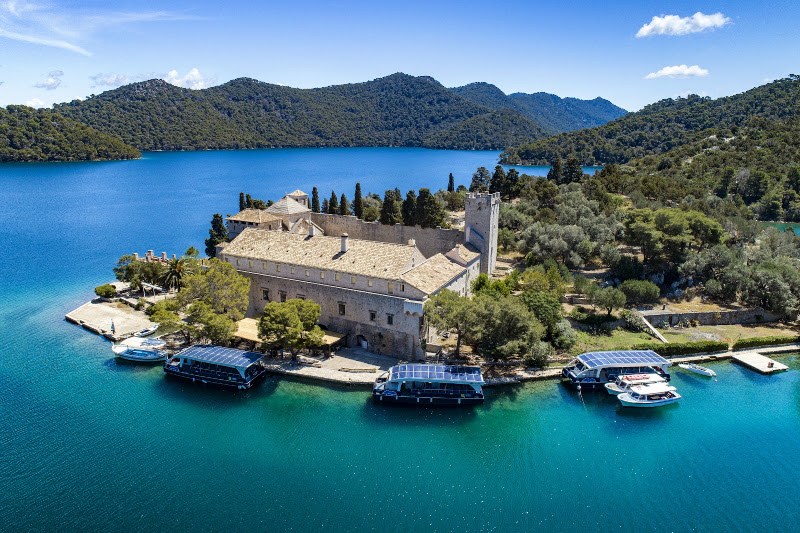
The western third of Mljet island is national park, and its centrepiece is a pair of interconnected saltwater lakes — Veliko and Malo jezero — that warm up faster than the open sea and stay calm in any weather. Floating in Malo jezero, ringed by Aleppo pines, is the single most spa-like experience Croatia’s parks offer. A solar-powered boat (included in the ticket) crosses to the islet of St. Mary and its 12th-century monastery.
Croatia’s most forested park is best done slowly: kayak the lakes, cycle the shoreline path, swim, repeat. Summer 2026 entry: €25 including the boat, open 08:00–19:00.
Nacionalni park Mljet
Goveđari
6. Paklenica — mountain reset by the sea
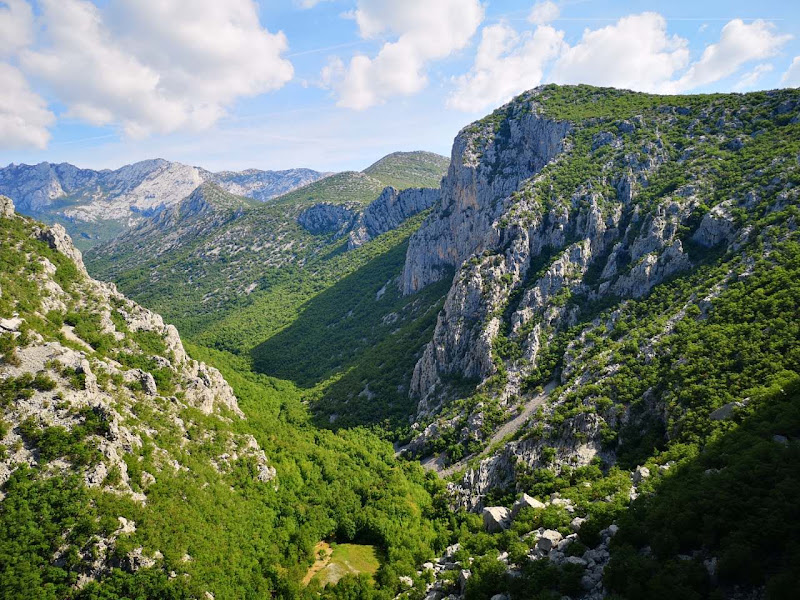
Paklenica compresses the full Velebit experience into one day: limestone canyons that funnel cool air even in August, Europe-class climbing routes on Anića kuk, and the Adriatic close enough that you can finish a canyon hike with a swim in Starigrad the same afternoon. The mountain-plus-sea combination is a natural contrast therapy session.
Trails range from the stroller-friendly canyon path to serious summit routes, so match ambition to the heat. Summer 2026 entry: from €10, open 06:00–20:30 — that early gate is worth using.
Nacionalni park Paklenica
Starigrad-Paklenica
7. Risnjak — old-growth quiet in Gorski kotar
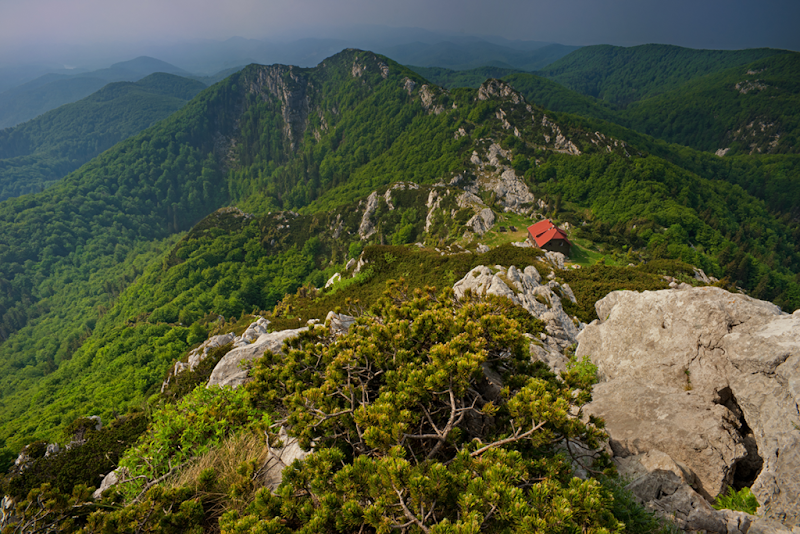
Risnjak is the park for people who want a forest to themselves. An hour from Rijeka, it protects Dinaric old-growth forest, the mountain source of the Kupa river and a resident population of lynx (ris — the park’s namesake), bear and wolf you will almost certainly not see but will enjoy knowing are there. Summer temperatures run 10 °C below the coast.
The Leska educational trail — 4.2 km, flat, with interpretive boards — is purpose-built for slow walking and is the easiest genuine forest-bathing circuit in the country. Summer 2026 entry: from €11 at the Bijela Vodica entrance, daytime visiting.
Nacionalni park Risnjak
Crni Lug
8. Northern Velebit — silence and starry skies
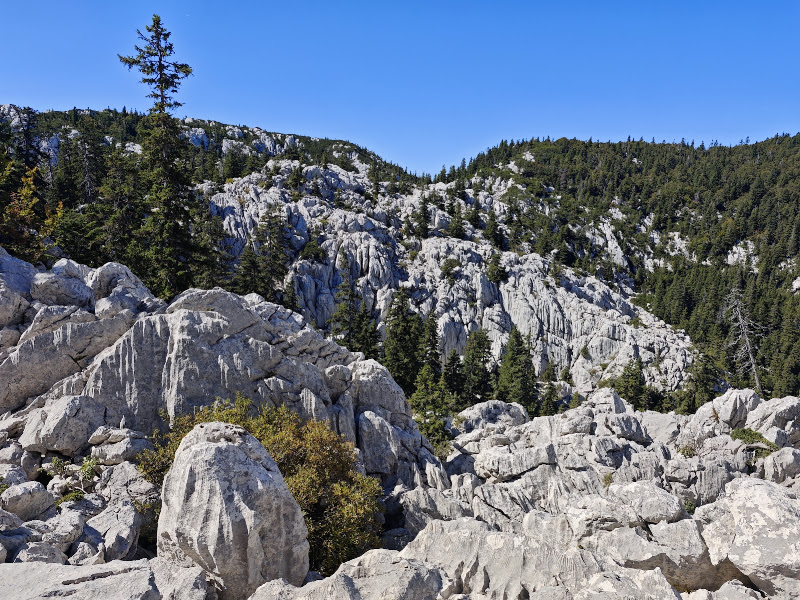
The youngest and least visited national park is a highland of UNESCO-listed beech forests, karst rock gardens and the Premužić trail — a 1930s dry-stone path engineered so gently that it feels level while it traverses the wildest ridge in Croatia. The Zavižan botanical garden near the trailhead grows Velebit’s endemic flora at 1,480 m.
With no light pollution worth mentioning, Zavižan is also one of the best stargazing spots in the country — time a visit to a new moon if you can. Summer 2026 entry: from €7, Babić Siča entrance open 07:00–20:00.
Nacionalni park Sjeverni Velebit
Krasno