Off to the mushrooms
Croatian law lets you pick three kilos of mushrooms a day for yourself and asks you to leave a third of every patch where it stands. In state forests you also need a permit most pickers have never heard of. What the regulations, the mycological societies and the poison centre say.
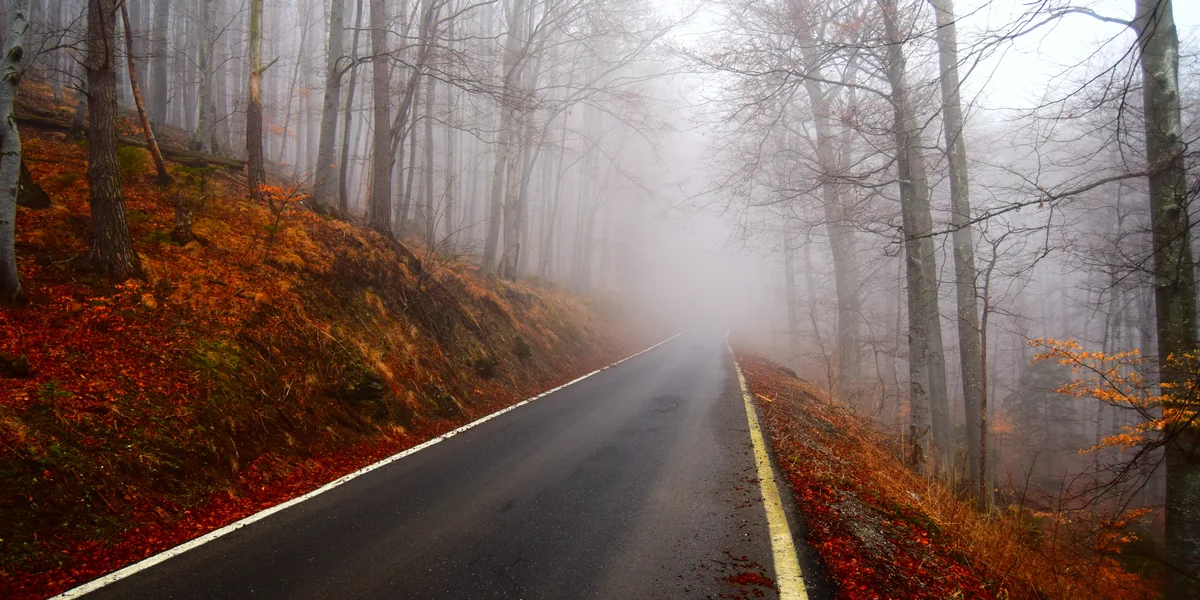
A Sunday at the end of September, seven in the morning, a car on a forest track. A basket on the back seat, a knife in the glovebox, and a route nobody in the family will describe exactly. Idemo u gljive is one of the few Croatian invitations that comes with a secret attached.
There is plenty to keep secret. The Croatian Encyclopaedia reckons at least 15,000 species of fungi grow here and calls them the least studied large group of organisms in the country. In 1966 the mycologist Milica Tortić wrote that people in Gorski kotar knew few edible mushrooms: they picked porcini, chanterelles, oyster mushrooms and morels, which they called marohlin. Sixty years on, Ravna Gora holds its 28th Mushroom Days, with a guided walk and a goulash contest. The rules have changed a few times along the way, and most of what people repeat about them is out of date.
Three kilos and a third
The rules are in the Ordinance on collecting native wild species, Narodne novine 114/2017, which replaced the mushroom ordinance from 2002. For yourself you may pick up to three kilos of above-ground mushrooms a day, all species together, and 0.1 kilos of truffles, with no permit from the ministry. Selling is another matter: commercial collecting needs the ministry’s permit and a contract with whoever holds it.
How you pick is written down too: by hand or with a knife, without other tools, so no rakes. The mycelium stays undamaged, very young fruiting bodies stay in the ground, and a third of every species you collect is left where it is.
The permit nobody mentions
The ministry issues no permits for personal use. Hrvatske šume, which runs the state forests, does. Under the Forest Act the public forest owner sets the conditions for collecting in its forests, and Hrvatske šume asks for a permit from everyone who collects in them, personal use included. The permit is free, issued online and valid until 31 December.
In six forest administration units there is no permit to be had. Because of African swine fever Hrvatske šume suspended and cancelled permits in Osijek, Vinkovci, Našice, Slatina, Požega and Nova Gradiška, and its notice of 23 July 2026 says the suspension still stands. Most of the state forest in eastern Slavonia is closed to pickers this season, so read the notice on the morning you go.
Where nothing is picked
In national parks the answer is no. The ordinances for Risnjak, Plitvice Lakes, Northern Velebit and Paklenica allow mushroom collecting only for science and education. Nature parks vary: Medvednica and Žumberak – Samoborsko gorje forbid only the protected species.
Croatia strictly protects 363 species of fungi. The one that gets people into trouble every autumn is the Caesar’s mushroom, Amanita caesarea, blagva, or žurdana in Istria: endangered on the national Red List and, Glas Istre reported in 2025, picked by almost everyone regardless. The State Inspectorate has quoted fines of 7,000 to 30,000 kuna for individuals, about 929 to 3,982 euros.
A determiner is not an app
Croatian mycology runs on volunteers. The Croatian Mycological and Mushroom-Pickers’ Association hands out its own titles, up to determiner and mentor, and these are a society’s qualifications rather than a state licence, which does not make them light: in Zagreb, GD Kamilo Blagaić runs an eighteen-week course, Karlovac’s Mushroom Week is in its 41st year and runs to 4 October 2026, and Brtonigla holds its Mushroom Days on 24 and 25 October. Bring what you found to one of these and someone will tell you what it is.
What most of us bring instead is a phone. The Poison Control Centre said back in 2017 that identifying mushrooms from pictures online does not work, and that you cannot tell a poisonous species from an edible one by taste. A 2023 study in Clinical Toxicology tested three apps on Australian species: right between 35 and 49 per cent of the time, and two of them waved the death cap through. France’s food safety agency, ANSES, puts it in one line: do not eat a mushroom an app identified. As for the silver spoon, the onion that darkens and the snail that already had a bite, none of that appears in any official guidance we read. The one test everyone agrees on is a person who knows the species.
Season 2026
Morels come from March to May and St George’s mushroom, jurjevka, from April to June. Porcini and parasols run from summer into autumn, chanterelles peak from June to November, and saffron milk caps and honey fungus come from August to November. Rain decides the rest, and this year there has been little of it. At the Porcini Days in Paka in September a picker told HRT: “There’s nothing. Because of the drought, I suppose.” Porcini were fetching 30 euros a kilo. From Gorski kotar and Istria we have no reports this autumn.
Truffles are mushrooms too
Truffles fall under the same ordinance, with stricter rules: 0.1 kilos a day for personal use, no more than two dogs, no digging between ten at night and six in the morning, and a legal season for each species, for the white truffle from 1 September to 31 December. Hrvatske šume issues truffle permits separately. The seventeen places around the Motovun forest where you can eat, hunt or buy them are in our collection Idemo u tartufe · Istra.
Safety, briefly
None of this will identify a mushroom for you. The poisonous species most often confused with edible ones are the death cap, Amanita phalloides, with parasols; fly agaric, Amanita muscaria, with the Caesar’s mushroom; and the jack-o’-lantern, Omphalotus olearius, and webcaps, Cortinarius, with chanterelles. The Poison Control Centre recorded 34 mushroom cases in 2023, 41 in 2024 and 22 in 2025, cases reported to the centre, not a national total.
Its advice line, 01 2348 342, is open to the public around the clock. In an emergency call 112 or 194. Pick only what you know, keep unknown mushrooms apart, and take anything you are unsure of to a determiner before it reaches the kitchen.
Most of the twenty-nine sources are ordinances and institutions; the legal figures come from the text of the ordinance itself, not from press summaries. Nobody has counted how many people in Croatia pick mushrooms, and Hrvatske šume has not published how many permits it issues. Whether any public-health institute identifies mushrooms for the public, and whether anyone checks the ones sold at markets, we could not establish; the Association’s code of ethics, which its statute requires, we could not find. Nothing here tells you whether a mushroom is safe to eat; only a determiner can.
- Narodne novine 114/2017 · Ordinance on collecting native wild species, Arts. 6, 7, 17, 18 and 21
- Hrvatske šume · Permits for non-wood forest products still suspended (African swine fever), 23 July 2026
- Hrvatske šume · Permit for collecting non-wood forest products
- Narodne novine 68/2018 · Forest Act, Art. 38
- Institute for Environment and Nature · Strict protection: 363 fungi
- Narodne novine 103/2023 · Protection ordinance, Risnjak National Park
- Narodne novine 80/2021 · Protection ordinance, Plitvice Lakes National Park
- Narodne novine 92/2024 · Protection ordinance, Northern Velebit National Park
- Narodne novine 76/2000 · Internal-order ordinance, Paklenica National Park
- Narodne novine 17/2021 · Protection ordinance, Medvednica Nature Park, Art. 20
- Narodne novine 82/2026 · Protection ordinance, Žumberak – Samoborsko gorje Nature Park, Arts. 14 and 47
- Red List of Croatia · Amanita caesarea
- Hrvatska enciklopedija · gljive
- Tortić, M. · Acta Botanica Croatica, 1966
- Ribafish · 28th Mushroom Days, Ravna Gora / Stara Sušica, 23 September 2026
- Glas Istre · Picking the Caesar’s mushroom, 4 November 2025
- State Inspectorate · Fines under the Nature Protection Act, 15 February 2022
- Statute of the Croatian Mycological and Mushroom-Pickers’ Association, amended 21 May 2010
- Nacional · Interview with GD Kamilo Blagaić, 25 October 2024
- Karlovački.info · 41st Mushroom Week, 24 September 2026
- Istra.hr · Mushroom Days in Brtonigla, 24–25 October 2026
- IMI Poison Control Centre · Warning on mushroom poisoning, 24 October 2017
- Hodgson et al. · Mushroom identification apps, Clinical Toxicology 2023
- ANSES · Toxicovigilance report 2025-VIG-0015
- Poison Control Centre · Annual report 2025, Arhiv za higijenu rada i toksikologiju
- Plantea · Honey fungus (medenjača)
- HRT Magazin · 13th Porcini and Black Truffle Days in Paka, 21 September 2026
- IMI · Poison Control Centre advice line open to the public, 3 July 2022
- HZJZ · Advice in case of exposure or poisoning, updated 23 April 2025